度身訂造適合您的網站,已成功設計 6000+ 公司網站,大量客戶真實好評

In the ever-evolving year of 2026,web design is no longer simply about visual aesthetics,but a complex field tightly integrated with user experience,technological innovation,and commercial value.UI(User Interface)and UX(User Experience),as the core pillars of web design,are constantly evolving in terms of skill requirements and industry trends,driven by evolving user needs and technological advancements.For web designers,only by accurately grasping core skills and keeping up with cutting-edge trends can they stand out in the fierce competition and create high-quality work that combines a superior user experience with strong commercial conversion potential.East Tech's Hong Kong team,with 15 years of experience in web design,serving over 6,000 clients and witnessing numerous industry transformations,provides this article,based on extensive practical experience,to break down the essential UI/UX skills and trends that designers must master in 2026,helping them advance their careers.
I.Core UI Skills in 2026:From Aesthetic Design to Systematic Creation
As the first window for user interaction with a website,UI design in 2026 has evolved from simply being aesthetically pleasing to possessing a comprehensive capability encompassing systematization,refinement,and inclusivity.This not only tests a designer's aesthetic sensibilities but also demands logical thinking and practicality.
1.Building a Brand-Oriented Design System
Excellent UI design never exists in isolation but is a visual language system deeply intertwined with the brand.In 2026,designers need to possess the ability to transform brand visuals—precisely conveying the brand's core values,positioning,and personality through UI elements such as color,font,icons,and layout.For example,when designing a website for a high-end luxury brand,low-saturation colors,streamlined layouts,and exquisite details are needed to highlight the brand's style;while trendy brands targeting younger consumers can utilize high-saturation contrasting colors,personalized fonts,and vibrant icons to enhance brand vitality.When designing websites for brands like Beijing Tongrentang and Shuangmei,East Tech consistently bases its work on brand visual manuals,building a unified and highly recognizable UI system that allows users to quickly perceive the brand's attributes visually.
2.Refined Implementation of Responsive Design
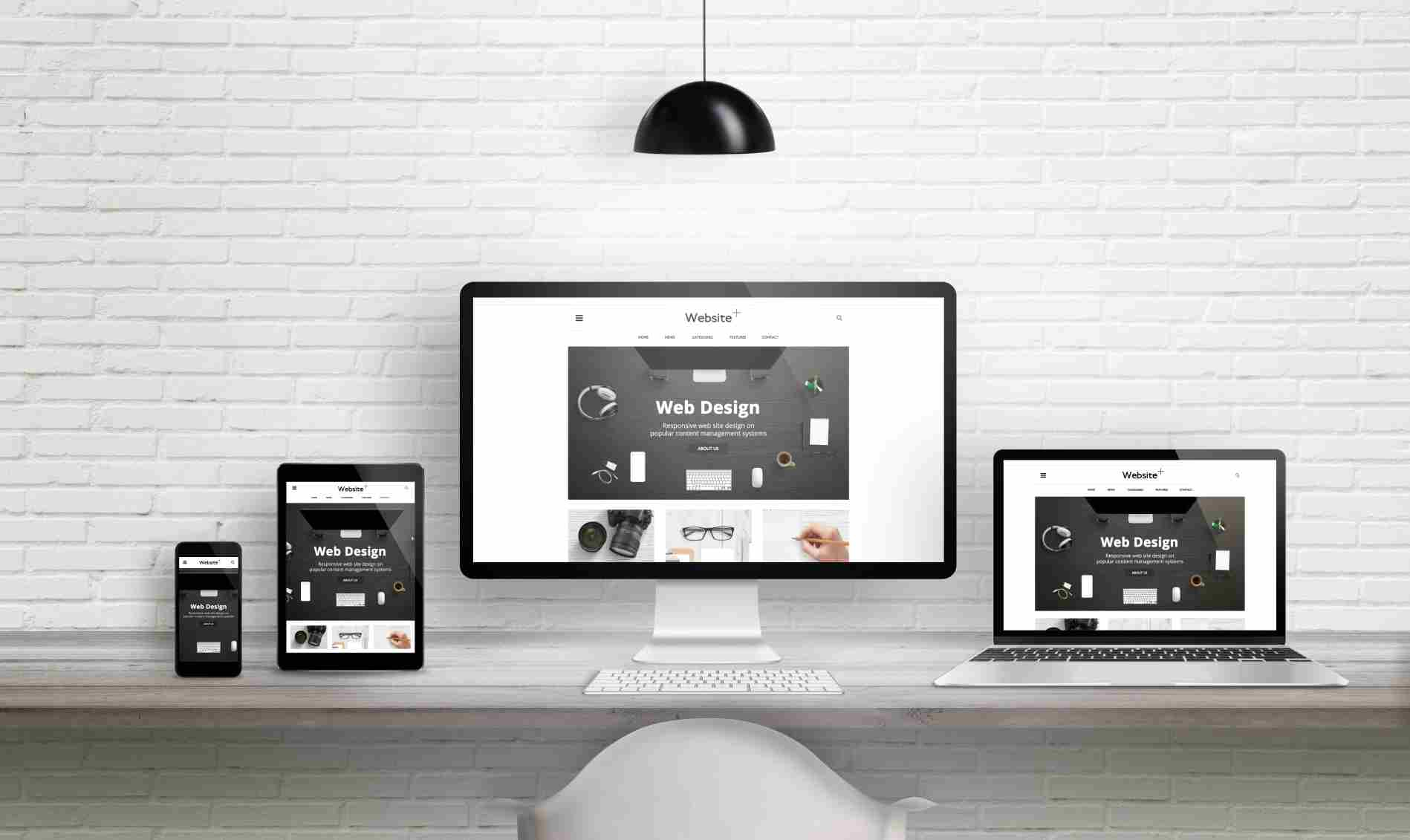
With the continuous rise in mobile browsing,responsive design has evolved from an option to a necessity,and by 2026,its requirements for refinement will be even higher.Designers must not only ensure website layout adaptability across different devices such as computers,mobile phones,and tablets,but also pay attention to the differences in operating scenarios and experiences across different devices:mobile devices need to enhance the comfort of touch interaction(such as optimizing button size and spacing),tablets need to ensure smooth switching between portrait and landscape modes,and desktops can utilize the larger screen space to enrich information hierarchy.Furthermore,the adaptation needs of emerging terminals such as foldable screens and wearable devices must be considered to ensure a consistent and high-quality visual experience across all devices.
3.Inclusive Design Thinking
Inclusive design has become one of the core trends in UI design,requiring designers to consider the needs of different groups,including the elderly,colorblind users,and users with disabilities.In 2026,designers need to master relevant design skills:for example,ensuring that the color contrast between text and background reaches standard valuesfor easy reading by users with poor eyesight;avoiding over-reliance on color to convey information,and using icons and text labels as supplementary aids;providing customizable settings such as font size adjustment and high-contrast modes to meet the personalized needs of different users.East Tech consistently incorporates inclusive design throughout the entire process when designing websites for government agencies,educational institutions,and other public clients,ensuring that the websites are user-friendly for all.
4.Restraint and Precision in Motion Design
Motion design is an important means of enhancing the UI experience,but the trend in 2026 is restraint and precision,rejecting meaningless and flashy animations.Designers need to clearly define the core purpose of motion effects:either to guide users to focus on key information(such as button click feedback,page scrolling guidance),to strengthen interaction logic(such as menu expansion/collapse,step switching),or to convey brand personality(such as lively motion effects for young brands,and a calm transition for high-end brands).At the same time,motion effects need to be controlled in terms of duration and rhythm to avoid excessively long motion effects affecting user operation efficiency,and to ensure that motion effects can run smoothly on low-configuration devices.
II.Core UX Skills in 2026:From User Needs to Business Value Transformation
The core of UX design is user-centricity,but in 2026,UX design is no longer limited to meeting basic user needs.It requires designers to possess data-driven,scenario-based,and business-oriented thinking to achieve a win-win situation for both user experience and business goals.
1.User Research and Needs Decomposition Ability
High-quality UX design begins with a deep understanding of users.In 2026,designers need to master diverse user research methods,including user persona construction,user interviews,questionnaires,and behavioral data analysis,to accurately uncover core needs from the dimensions of user behavior habits,pain points,and psychological expectations.For example,when designing for financial websites,the core user needs are security,efficiency,and ease of use.UX design needs to simplify operation processes,strengthen security prompts,and clearly present information.Conversely,when designing for e-commerce websites,the core user needs are quickly finding products and conveniently completing purchases.UX design needs to optimize search functionality,simplify checkout steps,and improve page loading speed.East Tech conducts preliminary user research when designing websites for clients such as Shide Financial and Anji Seafood to ensure that the design solutions accurately meet user needs.
2.Data-Driven Experience Optimization
Data has become a crucial decision-making basis for UX design.In 2026,designers need to possess basic data analysis skills,be able to interpret website user behavior data(such as page dwell time,bounce rate,conversion path,etc.),and identify pain points in the experience based on data feedback for targeted optimization.For example,if data reveals that the user bounce rate on the checkout page is too high,it may be due to too many checkout steps or insufficient payment methods.In this case,the steps need to be simplified and payment options added.If a menu item has an extremely low click-through rate,it may be due to an unreasonable entry point location or an unintuitive name.The menu layout needs to be adjusted or the name description optimized.
3.Contextualized Interaction Design Thinking
User scenarios directly impact the user experience.UX design in 2026 emphasizes contextualized thinking,requiring designers to design interaction flows based on real-world user scenarios.For example,when users browse websites on mobile devices during their commute,they may be in fragmented time and unstable network environments.UX design needs to optimize page loading speed,simplify operation steps,and avoid interactions requiring long input times or waiting periods.Conversely,when users are working on desktop devices in the office,they may need to access detailed information.UX design needs to provide rich information layers and convenient search functions.
4.Business Thinking and Conversion Path Optimization
UX design should not only make the user experience comfortable but also help clients achieve their business goals.In 2026,designers need to possess basic business thinking,understand clients'core business and commercial objectives(such as sales conversion,user registration,brand promotion,etc.),and optimize conversion paths through UX design.For example,when designing e-commerce websites,simplifying the purchase button with relevant product recommendations and limited-time offers can guide users to complete the purchase.When designing corporate websites,highlighting the"Contact Us"button and rationally arranging the consultation entry can improve the conversion rate of potential customers.East Tech consistently prioritizes user experience while achieving business goals throughout the design process,helping clients achieve both improved experience and enhanced performance.
III.Core Web Design Trends for 2026:Grasping Industry Development Directions
Besides solid core skills,designers need to keep up with industry trends to maintain the novelty and competitiveness of their work.In 2026,the web design field will exhibit the following four core trends:
1.A Balance of Minimalism and High-Quality Details
Minimalistism remains a mainstream trend,but it's no longer simply about less is more;it's about simplicity without simplification—creating clean pages through streamlined elements and ample white space,while emphasizing the presentation of high-quality details,such as refined shadows,subtle gradients,and high-quality images and fonts,giving the page a sophisticated feel within its simplicity.This design not only meets users'needs for a clear experience but also better highlights core information and brand image.
2.AI-Driven Personalized Design
The application of artificial intelligence technology in web design is becoming increasingly widespread.In 2026,AI-based personalized design will become a trend:websites can use AI algorithms to analyze users'browsing habits and interests,pushing personalized page content and layouts to different users;AI tools can also help designers improve work efficiency,such as automatically generating design drafts,intelligently matching color schemes,and previewing the adaptation effects on different devices in real time.However,it should be noted that AI is only an auxiliary tool;the designer's creativity and thinking remain the core factors determining the quality of the design.
3.Fusion of Realism and Digital Art
With the upgrading of design tools,the fusion of realistic design and digital art has become a new design trend.For example,incorporating subtle skeuomorphic elements(such as textured buttons and realistic lighting effects)into UI design increases the user's tactile perception;at the same time,combining them with digital art-style graphics and backgrounds creates a unique visual experience.This fusion style can satisfy users'need for realism while bringing a novel visual impact,suitable for trendy brands and creative websites.
4.Integration of Sustainable Design Concepts
Environmental protection and sustainable development have become a global consensus,and this concept is gradually permeating web design.In 2026,sustainable design will primarily manifest in two aspects:firstly,at the technical level,by optimizing code,compressing images,and reducing unnecessary animations to lower website energy and bandwidth consumption;secondly,at the visual level,by extensively using environmentally friendly colors such as green and blue,paired with natural elements in graphics and images,to convey the brand's sustainable development philosophy.
IV.Conclusion:Using Skills and Trends as Wings to Become a Top Designer
In the web design field of 2026,the boundaries between UI and UX will gradually merge,placing higher demands on designers'comprehensive abilities.From building a branded UI system to implementing inclusive design,from deeply understanding user needs to optimizing business conversion,from accurately grasping industry trends to flexibly applying new technologies,every skill requires designers to continuously learn and practice.