度身訂造適合您的網站,已成功設計 6000+ 公司網站,大量客戶真實好評
A high-quality web page,from conception to launch from not randomly assembled,but the result of step-by-step advancement following a scientific design process.Whether it is a personal blog,a corporate official website or an e-commerce platform,mastering the standard web production stage not only improves development efficiency,but also ensures that the final product meets user needs and business goals.The following is a detailed explanation of the 5 core stages of web design to help you establish a systematic website building thinking.
Stage 1:Requirements Analysis and Planning–Laying the core direction of the web page
The first step in web design is never to open the design software to draw a prototype,but to explicitly for whom to do,what to do,and what problems to solve.This stage is the basis of the entire process and directly determines the direction and effectiveness of subsequent work.
Core tasks include:First,clarify with the demand side(or themselves)the core objectives of the web page,is it brand display,product sales,information dissemination or user interaction?Secondly,target the target audience,analyze their age,usage habits,browsing scenario(computer/mobile phone),etc.For example,web pages for middle-aged and elderly groups need to simplify operation and enlarge fonts,while web pages for young groups can incorporate more interactive animations.Finally,the core functions and content architecture were combed to determine whether functions such as membership systems,shopping carts,and form submissions were needed,and site maps(page-level relationships)were planned.
Practical suggestions:Documents such as requirements instructions,user portraits,and site maps can be output to ensure that all participants reach a consensus on the requirements.For enterprise projects,it is recommended that professional teams such as United East Tech East Technology carry out demand dismantling to avoid subsequent rework due to vague demand.
Phase 2:Prototyping–Build a web skeleton structure
After clarifying the requirements,the prototype design stage is entered,the core of which is to transform the abstract requirements into a concrete page skeleton,which does not involve visual style,only concerned with page layout,element distribution and user flow.The purpose of this step is to ensure that the logic of the web page is clear and the operation is intuitive.
Core Task:Design a low-fidelity prototype(wireframe),determine the location of the page’s core elements,such as navigation bars,banners,content areas,buttons,footers,and plan the user interaction flow,such as the user’s steps from entering the homepage to completing the purchase/submission form.For multi-page websites,it is also necessary to ensure consistency in the layout of different pages to improve the user experience.
Stage 3:Visual design–giving the web page personality and beauty
After the prototype is confirmed,the visual design stage of determining the appearance of the web page is entered.This stage requires combining brand attributes and target audience preferences to fill the prototype with visual elements to create a unique web style,while ensuring coordination and unity of visual and functional.
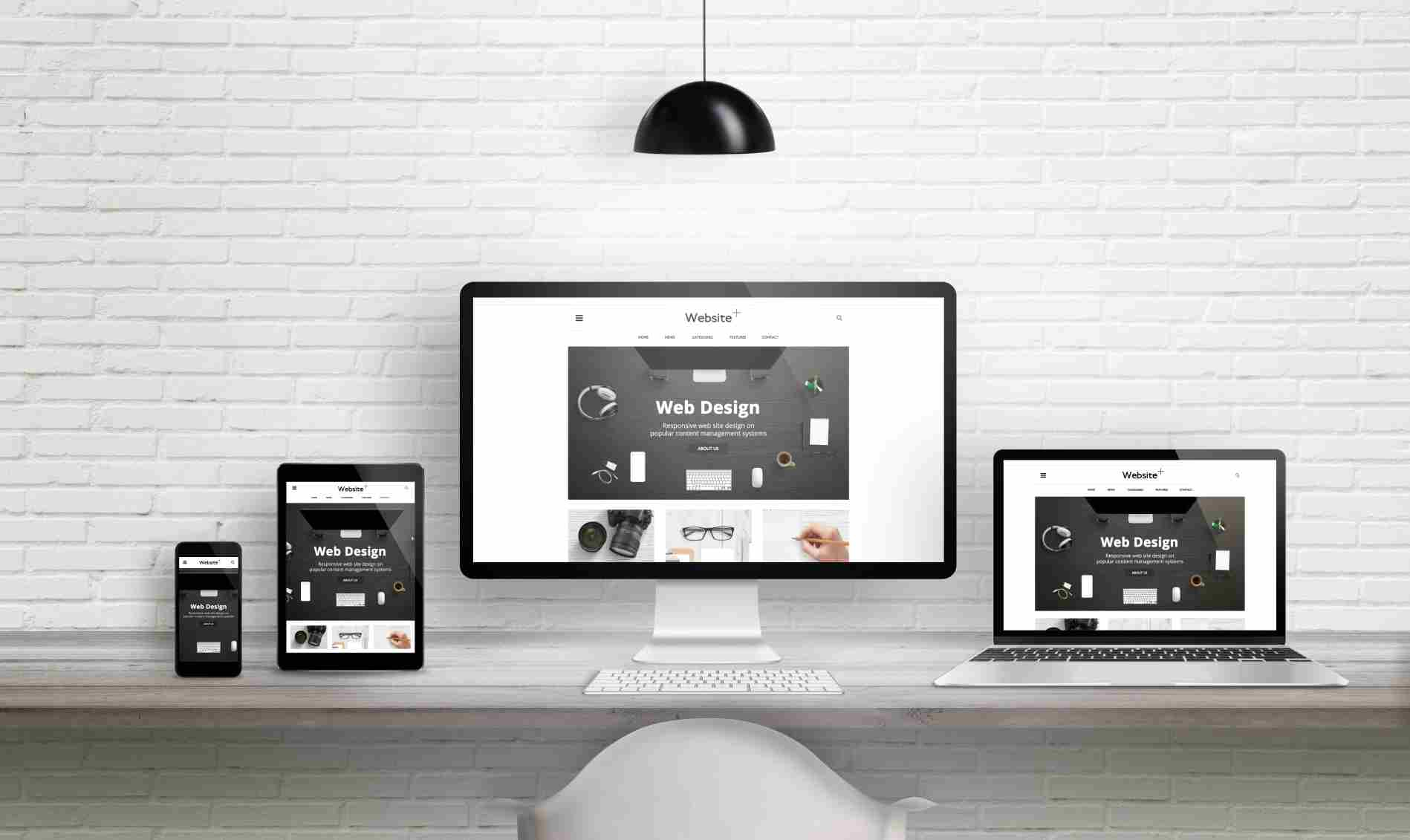
Core tasks:Determine design specifications,including color system(main color,secondary color,neutral color),font system(font,size,spacing of title,body,auxiliary text),icon style(linear,fill,flat);In addition,responsive design needs to be considered to ensure that web pages display properly on different devices such as computers,tablets,and mobile phones.
Key points:Visual design is not about blind pursuit of splendor,but about serving user experience and business goals.For example,e-commerce web pages need to highlight products and purchase buttons to reduce unnecessary decoration;corporate official websites need to embody brand professionalism,and color choices should not be too exaggerated.
Phase 4:Front-end development–turning the design draft into an interactive web page
Once the visual design draft is confirmed,front-end development engineers are needed to turn the static design draft into a dynamic web page that can be opened in a browser.This stage is the core part of realizing web functions and interactive effects.
Core tasks:Use HTML to build web page structure,use CSS(or SCSS/LESS)to restore visual design effects,including colors,fonts,layout,animations,etc.;then implement interactive functions through JavaScript,such as button click effects,carousels,form verification,pop-ups.For web pages that require dynamic content(such as information updates,user data display),it is also necessary to collaborate with back-end development to obtain data through the API interface.
Stage 5:Testing Optimization and Going Online–Ensure stable web page operation
After the front-end development is completed,it is not directly online,but needs to undergo rigorous testing and optimization to ensure that the web page can run stably and efficiently in different environments,bringing a good experience to the user.
Core tasks:Conduct multi-dimensional testing,including functional testing(verify that buttons,forms,interactions,etc.are normal),compatibility testing(testing display in different browsers,devices,resolutions),performance testing(optimizing page loading speed,such as compressed images,compressed code),compatibility testing(ensure that web pages meet relevant compliance requirements).Problems discovered during testing require timely feedback to the development team for correction.
Online and subsequent optimization:After the test passes,select the right server to deploy the web page,configure the domain name and SSL certificate;
Process-based thinking is the key to success in web design
The 5 stages of web design are interlocking,demand analysis and planning determine the direction,prototype design builds the skeleton,visual design imparts beauty,front-end development implements functions,and testing optimizes the security experience.Whether it is personal website building or corporate projects,following a scientific process not only reduces development risks,improves efficiency,but also creates high-quality web pages that meet user needs and business goals.Should you need professional support at a certain stage,teams such as East Tech can provide a full-link service from demand planning to development and launch to help you successfully complete your web production.
Whether you need brand official site or product showcase site. As an experienced web design company, East Tech provides complete web development without technical hassle.
WhatsApp Enquiry